1

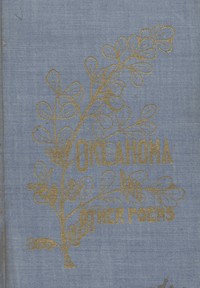
Oklahoma and Other Poems — Background and Themes
(0 User reviews)
1557
Project Gutenberg
2005
Not confirmed
Oklahoma -- Poetry
Readers of public-domain and historical texts
Project Gutenberg digital edition
en
Edition facts
Words
19,159
Reading time
84 min
Text sections
4
This digital edition of Oklahoma and Other Poems — Background and Themes is described by source-level measurements including 19,159 words, 1 hr 24 min estimated reading time, and 4 detected text sections.
The text analysis averages about 27.5 words per sentence, while the detected sections provide another way to judge how the source is divided.
Project Gutenberg metadata also associates the work with “Oklahoma -- Poetry,” connecting these edition facts with the source record’s subject description.
Source:
Project Gutenberg record #14953
Freeman E. Miller's 1895 collection of poems celebrates Oklahoma's rapid settlement and rural life, using recurring imagery of fairies, song, and seasonal change. The verse moves between public boosterism and private longing, with a formal, rhyming style.
Editorial Edition Score
4.5/5
★★★★★
★★★★★
Calculated from edition completeness, EPUB availability, text structure and catalogue metadata. Not a user rating.
How this score is calculated
- Description quality20 pts
- Title & short description10 pts
- Source metadata20 pts
- Text length15 pts
- Chapters / structure15 pts
- EPUB file integrity20 pts
Total of 100 points, scaled to a 2.5-5.0 range. Editions with an empty description or a missing EPUB file are not scored.
Edition quality
Read the Text
Produced by David Starner, William Flis, and the PG Online Distributed Proofreading Team.
FREEMAN E. MILLER, A.M.,
PROFESSOR OF ENGLISH LANGUAGE AND LITERATURE IN THE
AGRICULTURAL AND MECHANICAL COLLEGE OF
CHARLES WELLS MOULTON
BY FREEMAN E. MILLER, A.M.
CHARLES WELLS MOULTON,
_JAMES WHITCOMB RILEY,_
_MEMORY OF OTHER DAYS._
_Our dearest joys forever flow_ _From fountains of the Long Ago,_ _That from the heights of pleasures past_ _Flood all the present valleys vast,_ _And with eternal glees provide_ _The future's endless ocean tide._
_To ope each cage where a heartless age_ _Hath chained the birds of singing,_ _Till Love's own glee that is fond and free_ _Shall laugh where they are winging,--_ _Such is my wish. 'Tis true, hold I,_ _That songs, like birds, in bondage die._
OKLAHOMA 9 THE RACE FOR HOMES 15 AT PERRY, SEPTEMBER 16, 1893 19 "SING ME A SONG, O WIND." 21 A CHRISTMAS CAROL 24 YEARS THAT ARE TO BE 26 IF WE DON'T OR IF WE DO 28 DEAR SONGS OF MY COUNTRY 30 JULY FOURTH 33 "O, GENTLE SHADES OF QUIET WOODS." 35 LOVE 37 WINTERS ON THE FARM 39 "O, WEAK AND WEARY WORLD." 41 EX ANIMA 43 "LO, ALL THE AGE IS RANK WITH WRONG." 45 "LOVE, THOU GAYEST FANCY-WEAVER." 47 THE FARMER 49 "NATURE HAS A THOUSAND CHOIRS." 51 THE WORKINGMAN 53 GIVING AND FORGIVING 55 "O, SACRED SOULS THAT GRANDLY SING." 57 CHRISTMAS TIME 59 TRUEST HEROES ARE UNKNOWN 61 IF WE BUT KNEW 62 HOPE 64 DESPONDENCY 66 IF LOVE WERE KING 68 "SING ME THE OLD SONGS, MOTHER." 69 TWO LIVES 71 "AWAY, AWAY, FROM THE SULTRY WAYS." 72 SPINSTERHOOD 74 "SWEET FAIRIES FROM THE ISLES OF SONG." 75 STANZAS 77 "MAKE THE MOST OF THIS LIFE." 78 "THE SONGS THAT MOTHER USED TO SING." 80 "QUAFF THE GLASS, THE WINE IS RED." 81 GOOD-NIGHT 83 LIVE LIFE WITH LOVE 84 DISCONTENT 86 STANZAS 87 THE WAY OF THE WORLD 89 MY SHADOW AND I 90 IN THE VALES 91 THE WILLOW 92 AT THE MILL 94 SHADOW AND SHINE 95 THE GROWTH OF SONG 96 SPRING AND MUSIC 97 COMPENSATION 98 MY MOLLIE, O 100 SING NOT OF BEAUTY 101 AT EVENTIDE 102 WHEN CHRISTMAS COMES 103 WHEN THOU ART NEAR 104 HE SLEEPS AT LAST 105 WHEN FORTUNES FROWN 106 WHEN WE SHALL MEET 107 SWEET EYES OF BLUE 108 HAD WE NOT MET 109 A SONNET 110 OKLAHOMA.--A SONNET 111 ESTRANGED 112 RECONCILED 113 THE DYING HERO 114 SONNET 115 GREATNESS LIVES APART 116 POEMS 117 SINGER AND SONG 118 TO ONE WHO PLEDGED HER FRIENDSHIP 119 THE BANKS O' TURKEY RUN 119
Oklahoma! Oklahoma! Land, O, land of the Fair God, Land where ancient, savage races Through barbarian ages trod! Through thy story fancy traces Facts above what fictions say, Where the world with haste advances,-- Born are nations in a day! Where the wigwam stood so lonely, Lordly cities rise in might; Where spread desert wildness only, Fertile farms and homes delight. Thou hast summoned to thy bosom From the ends of all the earth, All the youngest, strongest, bravest, Full of will and wondrous worth. O'er thy valleys grow the blossoms Culled from earth's remotest sod; Oklahoma! Oklahoma! Land, O, Land of the Fair God!
Oklahoma! Oklahoma! There is music in thy name. There is gladness in thy glory, There is fondness in thy fame! In the wonders of thy story Shines the sheen of noble deed, Brighter than the glare of battle Where the warriors toil and bleed; Ruling with immortal forces, There is found the king of might, Over all thy great resources By the strength of truth and right. With thy happy sons and daughters, Live the virtues fair and pure, And the better angels guiding Keep their hearts and souls secure. There are treasures in thy valleys, There are treasures in thy hills; Oklahoma! Oklahoma! How thy name my bosom thrills!
Oklahoma! Oklahoma! Child of law and liberty, Thou art always true and tender, Thou art ever dear to me! I will always praises render To the grandeur of thy worth, For the fortunes all presided At the moment of thy birth. Pleasures in their pure completeness O'er thy pleasant prairies shine, And the raptures run with fleetness Through the happy vales of thine. Thou art empress of the angels, Thou art queen of all the gods, And the happiness of heaven O'er thy laughing valleys nods. I will always crown with praises All thy glories, O, my state; Oklahoma! Oklahoma! Thou art greatest of the great!
Oklahoma! Oklahoma! Bravest are thy noble sons, In the thunders of the battle, And the roaring of the guns! Flash of sword and musket's rattle Never fearful terror gave To the staunch and valiant bosoms Of thy happy hosts and brave. When the roars of hell grow louder, And the mountains shake in fright, In the lurid clouds of powder, They are foremost in the fight; And when bayonet and musket, Sword and saber, slaughter cease, They are tenderest and truest In the silent ways of peace. O, my state! A stream of greatness From thy mighty people runs; Oklahoma! Oklahoma! Bravest are thy noble sons!
Freeman E. Miller's Oklahoma and Other Poems (1895) opens with a sonnet that frames the territory as a land where 'nations are born in a day,' a line that captures the collection's central tension between rapid historical change and timeless natural cycles. The poems shuttle between public celebrations—the land runs, agricultural abundance, patriotic holidays—and private meditations on love, loss, and artistic aspiration. Miller, then a professor at Oklahoma Agricultural and Mechanical College, writes in formal, end-rhymed stanzas that often personify abstract forces like Hope, Despondency, and Song as active characters.
Land Runs and Lyric Time
The poems explicitly tied to Oklahoma's settlement—'Oklahoma,' 'The Race for Homes,' 'At Perry, September 16, 1893'—treat the land runs as epic, almost biblical events. 'Oklahoma' contrasts 'the wigwam stood so lonely' with 'lordly cities rise in might,' a before-and-after structure that recurs throughout the volume. Yet Miller undercuts this triumphalism by embedding the runs within a cyclical natural calendar: the same poem moves from 'ancient, savage races' to 'fertile farms' without resolving the displacement. In 'The Race for Homes,' the rush for land is described as a 'maddened throng,' suggesting both excitement and chaos. The poems rarely linger on individual settlers; instead, they emphasize collective, almost mythic transformation.
Fairies, Birds, and the Machinery of Song
A persistent set of images—fairies, birds, choirs, and 'isles of song'—functions as a self-referential commentary on poetry itself. In 'Sweet Fairies from the Isles of Song,' Miller addresses 'bewitching choirs from music land' who once 'wooed me from the ways of wrong,' framing artistic inspiration as a rescue from moral or emotional failure. The poem 'The Growth of Song' treats songs as organic entities that 'grow' like plants. Birds appear as figures for the poet's voice: 'songs, like birds, in bondage die,' warns the dedication to James Whitcomb Riley. This recurring vocabulary suggests Miller saw his craft as both a natural force and a fragile, caged thing.
Rural Retreat and Urban Anxiety
Several poems construct a sharp binary between the 'weary, dusty town' and the restorative countryside. 'Away, Away, from the Sultry Ways' urges flight to 'grassy hills' and 'quiet vales of rest,' where 'the old grow young once more.' The farm is idealized as a site of physical and spiritual health: 'the sweetest joys and highest hopes / On the shady farms are found.' Yet this pastoralism is undercut by poems like 'The Workingman' and 'Discontent,' which acknowledge labor's hardships. Miller rarely specifies which town or farm he means; the opposition is generic, almost allegorical. The effect is to make rural life a timeless counterweight to the historical specificity of the Oklahoma poems.
Repetition and the Solitary Speaker
Miller's verse relies heavily on anaphora and parallel structure. 'Oklahoma! Oklahoma!' opens the title poem with a doubled invocation, and 'Alone, alone, in the twilight gray' begins 'Spinsterhood' with the same device. This repetition creates a chanting, incantatory rhythm that suits the collection's frequent addresses to abstractions—Love, Hope, Despondency. The speaker is often solitary: waiting, watching, or remembering. 'Spinsterhood' presents a woman who 'wait[s] with my heart for him,' while 'My Shadow and I' literalizes solitude as a companion. Even the public poems feel mediated by a single, observing consciousness. This tension between collective celebration and individual longing gives the volume its distinctive emotional range.
Readers approaching Oklahoma and Other Poems will find a work that oscillates between booster anthem and private lyric. Miller's formal conservatism—regular meter, full rhymes, personified abstractions—may feel dated, but it also gives the collection a consistent, almost ritualistic texture. The poems reward attention to their recurring images: fairies, birds, farms, and the figure of the waiting heart. Because the excerpts are incomplete, the full arc of the volume—especially its later, more personal poems—remains partly conjectural.
Leafing through Oklahoma and Other Poems, I kept lingering on those quiet verses about longing beneath the booster's cheer. That private ache under bright rhymes reminded me of something gentler, older—how Miller's fairies felt like echoes of another's mountain spring. I found myself pulling the pages of The Mountain Spring, and Other Poems — Key Ideas to Explore from memory, wondering if all that sunshine hides the same pause for breath.
There are no reviews for this eBook.
There are no comments for this eBook.
Reader reflection
Take a moment to reflect on this book
Create a short personal record of your experience with this book.
Your progress
0
/
10
2
How much did you enjoy the reading experience?
3
Would you pass this book on to a friend?
4
What was the reading difficulty like?
5
Did any part of the book stay with you emotionally?
6
Which element worked best for you?
7
How closely did the book connect with your experience?
8
Did the book offer a fresh perspective?
9
What did this book teach you most?
10