1

Poems — Context and Discussion
(0 User reviews)
68
Project Gutenberg
2005
Not confirmed
Poetry
Readers of public-domain and historical texts
Project Gutenberg digital edition
en
Edition facts
Words
8,465
Reading time
37 min
Text sections
2
For Poems — Context and Discussion, the stored edition analysis reports 8,465 words, 37 min estimated reading time, and 2 detected text sections.
The text analysis averages about 24.0 words per sentence, while the detected sections provide another way to judge how the source is divided.
Project Gutenberg metadata also associates the work with “Poetry,” connecting these edition facts with the source record’s subject description.
Source:
Project Gutenberg record #14871
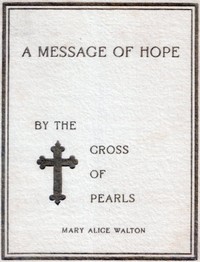
Mary Alice Walton's 1910 collection of devotional poems, composed while blind, uses recurring imagery of pearls, crosses, and celestial gates to express faith tested by sorrow. The preface frames the poems as testimony, and the verse blends personal lament with hymns of hope.
Editorial Edition Score
4.5/5
★★★★★
★★★★★
Calculated from edition completeness, EPUB availability, text structure and catalogue metadata. Not a user rating.
How this score is calculated
- Description quality20 pts
- Title & short description10 pts
- Source metadata20 pts
- Text length15 pts
- Chapters / structure15 pts
- EPUB file integrity20 pts
Total of 100 points, scaled to a 2.5-5.0 range. Editions with an empty description or a missing EPUB file are not scored.
Edition quality
Public-domain source text
Read the source text
The source text is kept in the dedicated reader, separate from this catalogue record and its commentary.
Mary Alice Walton's Poems (1910) opens with a preface that is itself a piece of testimony: the author states the booklet was composed while ill and either blind or nearly so, offered to strengthen faith in God. The poems that follow are not abstract meditations but specific responses to physical affliction and loss. Walton describes her life as 'more than filled by the disciplinarian, sorrow,' and the verse repeatedly returns to images of blindness, waiting, and the tactile comfort of a cross 'covered o'er with pearls of prayer.' The collection's structure—moving from lament to longing to assurance—mirrors a spiritual journey shaped by hardship.
Diction of Affliction and Consolation
Walton's word choices consistently pair physical suffering with spiritual reward. In 'The Solitary Lament,' she writes of eyes 'ever closed by day and by night' and a speaker who is 'helpless and blind.' Yet the same poem introduces a 'small ray of sun' as a daily visitor, a precise detail that anchors the abstract in the sensory. The cross is described as 'with pearls and gems inlaid,' where each pearl was 'once a tear, / Repentant sighs, a hope, a fear.' This metaphor transforms pain into ornament, a recurring verbal strategy. Elsewhere, 'The Land of Love' lists what is absent—'No hearts there to ache, no sins to repent'—using negation to define heaven by earthly lacks. The diction is plain but deliberate, favoring concrete nouns (tears, pearls, gates, rills) over abstraction, which gives the poems a tactile quality despite their otherworldly subjects.
Voice Between Lament and Hymn
The poems shift between a personal, grieving voice and a communal, hymn-like tone. 'The Solitary Lament' is intensely first-person: 'I shed bitter tears, / Wearily waiting these many long years.' The speaker's isolation is emphasized by the line 'they've taken my children away from their home,' a specific loss that resists generalization. In contrast, 'Golden Gates' adopts a choral structure with a repeated refrain—'Lift up, ye gates, ye golden gates'—and uses 'we' and 'our' to include the reader in a shared hope. 'Hope Beyond' addresses bells directly ('Ring out, oh, ye bells'), a device that distances the speaker from immediate pain. This alternation between solitary complaint and collective praise suggests a deliberate rhetorical movement: the poet models how personal grief can be reframed as worship. The preface's claim that the poems were written 'to strengthen faith' is borne out by this structural choice.
Recurring Images of Light and Vision
Given the author's blindness, it is striking how often the poems invoke light, sight, and visual detail. 'The Solitary Lament' describes eyes that 'have lingered on objects of light' and a sunbeam that 'gladly doth run' across the speaker's face, bringing 'news of the weather and time.' This is not mere convention; it is a precise observation of what a blind person might still perceive—warmth, movement, the passage of daylight. In 'The Land of Love,' heaven is depicted with 'bright jeweled mansions,' 'fountains that sparkle,' and 'bright suns that shine.' The visual richness of these descriptions contrasts with the speaker's earthly darkness, creating a tension that is never fully resolved. 'Golden Gates' imagines a moment when 'this poor world's light will fade,' but the fading is not feared; it is the prelude to seeing 'the crystal lake.' Walton uses light as both a literal absence and a promised presence, a duality that gives the poems their emotional weight.
Structure as Spiritual Progression
The sequence of poems follows an implicit arc from suffering to anticipation to rest. Early poems like 'The Solitary Lament' and 'Under the Rod' dwell on present pain and divine testing. Middle poems such as 'The Cross of Pearls' and 'The Land of Love' shift toward consolation and heavenly reward. Later poems—'For I Long to be There,' 'Golden Gates,' 'Hope Beyond'—express a yearning for death as release. This progression is not strictly linear; 'The Cross of Pearls' appears first in the table of contents but its theme of transformation (tears into pearls) echoes throughout. The final poem, 'Peace,' likely concludes the collection with a note of resolution. Walton's preface describes being 'brought through the fire with unshaken faith,' and the arrangement of the poems mirrors that journey. Readers may notice how the same images—cross, pearls, gates, tears—recur with accumulating meaning, creating a cohesive devotional arc rather than a random gathering of verses.
Walton's Poems rewards attention to its small, precise details: the sunbeam that visits daily, the cross 'kissed' to inlay a pearl, the bells rung in 'soft measured chime.' These are not ornamental but structural, anchoring spiritual longing in physical experience. The collection is brief—fewer than 9,000 words—and can be read in a single sitting, but its patterns of imagery and voice invite rereading. The preface warns that the poems were composed under extreme duress, and the verse itself bears witness to that constraint, turning limitation into a disciplined art of hope.
Reading these pearls and crosses, I remembered sitting with my grandmother, her Bible open to the same worn verses. She’d lost her sight too, yet spoke of light. Later, I found that same quiet fortitude in The Complete Poems of Paul Laurence Dunbar — Context and Discussion; his dialect poems hummed with a similar, stubborn hope beneath the sorrow. Both voices felt like old friends.
There are no reviews for this eBook.
There are no comments for this eBook.
Reader reflection
Before you leave, reflect on the book
Use these questions to collect your thoughts before moving on.
Your progress
0
/
10
2
Was reading this book enjoyable?
3
Would you recommend this book to another reader?
4
How much effort did this book require?
5
Which element worked best for you?
6
What did you think about the pace?
7
Do you expect to return to this book?
8
Did the book give you something worth debating?
9
What did this book teach you most?
10