
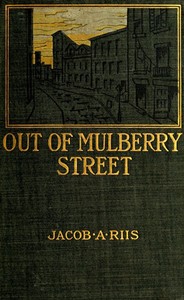
Out of Mulberry Street: Stories of Tenement life in New York City by Jacob A. Riis
Jacob Riis's 'Out of Mulberry Street' isn't a novel with a single plot. Instead, it's a series of snapshots—both in words and with his groundbreaking photographs—of life in New York City's immigrant neighborhoods at the turn of the 20th century. Riis walks the reader through the infamous Mulberry Bend and the surrounding blocks, introducing us to the people who call these crowded tenements home.
The Story
There's no main character. The 'story' is the collective experience. We meet Italian families crammed into single rooms, Jewish peddlers trying to earn a living, and children who find adventure in the grimy streets because they have nowhere else to go. Riis shows us the shocking conditions: buildings with no light or ventilation, courtyards filled with garbage, and rooms where disease spreads easily. But he also shows the resilience. We see community celebrations, neighbors helping each other, and the fierce determination of parents trying to give their kids a better chance. The narrative moves from the despair of a sweatshop worker to the simple joy found in a rooftop garden, painting a complete, human picture.
Why You Should Read It
This book changed how I see cities. It's easy to romanticize the past, but Riis forces you to look directly at its harsh realities. What stuck with me weren't just the statistics about overcrowding, but the small, personal details: the smell of stale air in a windowless room, the sound of many families through thin walls, the way sunlight became a precious commodity. It makes history feel immediate and personal. You're not just learning about tenement reform; you're understanding why it was a matter of life and death. Riis's writing isn't sentimental—it's direct and urgent, which makes the moments of hope he finds even more powerful.
Final Verdict
Perfect for anyone who loves narrative nonfiction, urban history, or true stories about everyday people. If you enjoyed books like 'The Ghost Map' or 'The Warmth of Other Suns,' you'll appreciate Riis's approach. It's also a great, eye-opening read for anyone living in a big city today—you'll never look at your own neighborhood the same way again. Be prepared: it's not a light read, but it's a profoundly important one that gives voice to a forgotten chapter of the American story.
This title is part of the public domain archive. Share knowledge freely with the world.
Robert Thomas
1 year agoI was skeptical about the depth of this book at first, but the evidence-based approach makes it a very credible source of information. I am looking forward to the author's next publication.
Linda Wilson
1 year agoThe layout is perfect for tablet and e-reader devices.
Melissa Flores
1 year agoAmazing book.
Deborah Brown
1 year agoText is crisp, making it easy to focus.







Karen Gonzalez
11 months agoLooking at the bibliography alone, the argument presented in the middle section is particularly compelling. The price-to-value ratio here is simply unbeatable.