
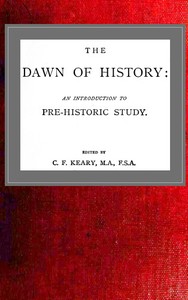
The Dawn of History: An Introduction to Pre-Historic Study by C. F. Keary
Published in the late 19th century, C. F. Keary's The Dawn of History is less a dry textbook and more a guided tour of humanity's earliest chapters. Keary was writing at a time when archaeology was really taking off, and you can feel his excitement. He's trying to make sense of brand-new discoveries and fit them into a story about us.
The Story
There isn't a plot in the traditional sense—no main character except humanity itself. Instead, Keary walks us through the evidence. He starts with the Stone Age, explaining how early humans made tools and survived. He then moves to the big shifts: the discovery of farming, the taming of animals, and the move from nomadic life to settled communities. Finally, he explores how these first villages grew into more complex societies, setting the stage for what we call 'history'—the part with written records. The book's journey is from silence to the first whispers of civilization.
Why You Should Read It
What makes this old book still worth reading is Keary's voice. He's not a detached scientist; he's a storyteller trying to connect the dots. He wonders about the people behind the tools. What were their days like? What did they fear or hope for? His writing makes the distant past feel immediate. While some of his 19th-century ideas are outdated (modern science has moved on), that's part of the charm. Reading it is like looking at the first map of a newly discovered land—it shows how people first tried to understand our shared beginnings. It makes you appreciate both how much we've learned and how many mysteries remain.
Final Verdict
This book is perfect for curious readers who enjoy big-picture history and don't mind an older perspective. It's not for someone seeking the latest archaeological findings. Instead, it's for anyone who likes to ponder deep questions about human origins. Think of it as a thoughtful, slightly poetic foundation stone. If you want to understand how people started telling the story of prehistory, Keary's passionate introduction is a great place to begin.
No rights are reserved for this publication. Access is open to everyone around the world.
Mary Miller
2 months agoI took detailed notes while reading through the chapters and the structural organization allows for quick referencing of key points. An excellent example of how quality digital books should be formatted.
Robert Rodriguez
2 years agoExceptional clarity on a very complex subject.
Michael Anderson
1 year agoIf you're tired of surface-level information, the cross-referencing of different chapters makes it a great study tool. Simple, effective, and authoritative – what else could you ask for?
Jennifer Miller
11 months agoComparing this to other titles in the same genre, the emphasis on ethics and sustainability within the topic is commendable. Well worth the time invested in reading it.







Margaret Jackson
11 months agoThis is now a staple reference in my professional collection.