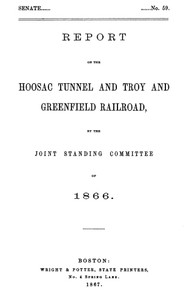
Report of the Hoosac Tunnel and Troy and Greenfield Railroad, by the Joint…
Let's be clear from the start: this isn't a bedtime story. Report of the Hoosac Tunnel and Troy and Greenfield Railroad is exactly what the title says—a formal 19th-century government document. But within its pages of testimony, financial figures, and engineering descriptions lies a drama so intense it feels fictional.
The Story
The core of the book is the official investigation into a monumental failure. The Hoosac Tunnel project was meant to be an engineering marvel, carving a five-mile path through the heart of Hoosac Mountain in Massachusetts. It was supposed to bring prosperity and secure a railroad route. Instead, it became a nightmare. The report lays out, in stark detail, how the project consumed vast sums of public money with little progress. It documents the dangerous use of nitroglycerin, which led to fatal explosions, and the flawed machinery that constantly broke down. You hear from engineers, contractors, and company officials, each giving their side of the story as the venture collapses around them. The 'plot' is the slow, painful unraveling of a grand dream into a morass of debt, danger, and recrimination.
Why You Should Read It
I loved this because it's real. There's no narrator smoothing things over. You get the facts, the excuses, and the contradictions straight from the people who were there. It's a masterclass in how big projects can go off the rails (pun intended). The themes are timeless: the clash between human ambition and physical reality, the way money and politics can corrupt a good idea, and the human cost of progress. Reading the dry descriptions of accidents or the frustrated testimony of engineers, you feel the weight of the mountain—both literally and figuratively—pushing down on everyone involved.
Final Verdict
This is a niche read, but a powerful one. It's perfect for history buffs who want the unvarnished truth, true-crime fans who enjoy dissecting a disaster (just without the murder), and anyone fascinated by infrastructure, engineering, or American history. If you enjoy books like The Devil in the White City that explore the dark side of grand ambitions, you'll find a similar, raw energy here. Just don't expect a novel—expect to be a fly on the wall at the most stressful post-mortem meeting of the 1850s.
You are viewing a work that belongs to the global public domain. It serves as a testament to our shared literary heritage.