
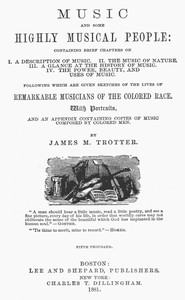
Music and Some Highly Musical People by James M. Trotter
Let's set the scene: It's 1878, just over a decade after the Civil War. The idea of 'Black music' for most white Americans likely meant spirituals or minstrel show caricatures. The concept of Black composers writing symphonies, operas, and complex chamber music was, to many, unthinkable. James M. Trotter, an accomplished and educated man himself, knew this was a lie. So, he did something radical. He wrote a book.
The Story
This isn't a novel with a plot, but it has a powerful driving force: evidence. Trotter methodically builds his case, profile by profile. He introduces us to figures like Thomas Greene Bethune ('Blind Tom'), a piano prodigy whose talents astounded audiences worldwide. We meet composers like Samuel Snaer of New Orleans and Joseph White, a virtuoso violinist trained in Paris. For each person, Trotter provides biographical details, describes their musical style, and often includes press clippings from concerts to prove their public acclaim. He covers singers, instrumentalists, and composers, creating a panoramic view of a thriving, sophisticated musical community that mainstream history books simply ignored.
Why You Should Read It
Reading this book feels active. You're not just absorbing information; you're participating in Trotter's act of recovery. His voice is clear, proud, and sometimes rightfully frustrated. You can feel his determination to create a permanent record against the tide of prejudice and forgetfulness. The most compelling part isn't just the talent he highlights—it's the normalcy he portrays. These were not oddities or exceptions, in his view, but part of a natural flowering of artistic expression. It completely reshapes your understanding of 19th-century American culture. You realize how much richer and more complex our musical heritage is than the standard timeline lets on.
Final Verdict
This book is a must-read for music lovers who want to dig deeper than the standard classics. It's perfect for history buffs interested in the real, multifaceted lives of Black Americans after the Civil War, beyond the narratives of just struggle and hardship. It's also incredibly valuable for musicians and composers looking for forgotten inspiration. Be warned: it's an old book, so the writing style is formal by today's standards. But push through that, and you'll find a work of profound love and defiance. James M. Trotter wasn't just writing about music; he was writing his friends and colleagues into existence for future generations. We're finally those generations he was writing for. It's time we listened.
This publication is available for unrestricted use. You are welcome to share this with anyone.
Lucas Nguyen
9 months agoThe formatting on this digital edition is flawless.
Karen Rodriguez
1 year agoI came across this while browsing and the emotional weight of the story is balanced perfectly. Don't hesitate to start reading.
Robert Thompson
10 months agoWow.
Patricia Thomas
1 year agoBeautifully written.



Emma Hill
1 year agoAs someone who reads a lot, the depth of research presented here is truly commendable. A true masterpiece.